Feline communication.
On this page I will try to introduce you a bit to the feline world. Cats are generally opposed to dogs as self-sufficient animals, unsocial, reluctant to any kind of cooperation and fundamentally selfish and deceitful. I won't pretend that there wasn't a time when I thought the same way. It seemed to me that the combination of me + cat was rather not a good match, in fact impossible, and certainly not for long.
Reality, as in many other matters, corrected, if not absolutely all, then definitely the majority of those opinions. Actually, the only thing that remained with me from that period is the awareness that a cat has a different psyche than a dog. This is the only "belief" that I still remain faithful to, everything else should rather be relegated to "the realm of fairy tales," not to mention a more prosaic place. A cat is certainly not as easy a companion as a dog, but what satisfaction it gives when we discover that it recognizes our footsteps and sits by the door to be the first to greet us. Because as a true nap-lover, unlike a dog, he won't interrupt his sleep and lounging for just anyone to do so... 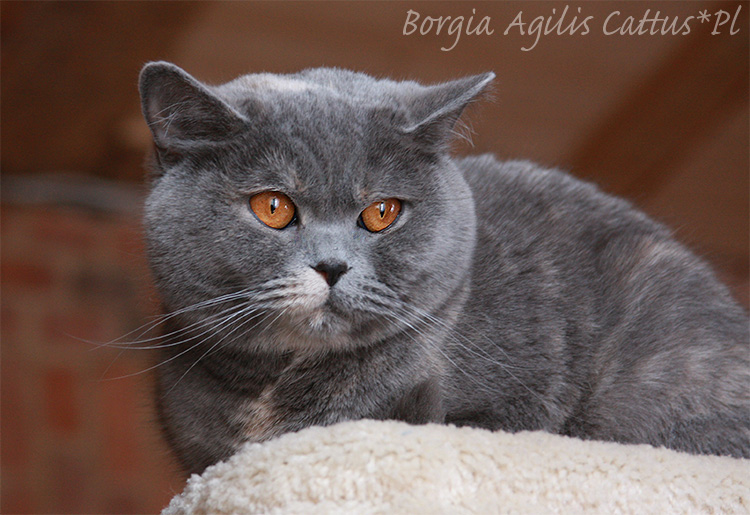
Our perception of cats
Cats have a dual nature. At home they are soft, plush, purring cuddlies; when they find themselves outside, they transform into the feline equivalent of the Terminator - they can track, corner and kill their prey with perfect dexterity. Of course, there are exceptions. Some cats wouldn't catch a mouse even if it sat right in front of their nose, but such cases are extremely rare.
The sense that stimulates a cat to hunt is sight. If they see something moving very quickly, they will instinctively chase it, even if they don't manage to register what it actually is. (Everyone who has walked barefoot around the house, or stuck a bare foot out from under a blanket knows this - moving toes are "caught" quickly and efficiently, even though the cat certainly has no doubts that it's not a mouse.) We use this trait to play with a cat - the fleeting laser light on the floor, or a string moving in front of a cat's nose pretending to be a mouse tail immediately provokes most cats to chase and play.
When a cat spots something worth hunting, its entire body is put into a state of readiness, pupils dilate, and ears and whiskers are directed forward, focused on the prey. The cat then flattens itself and seeks a place where it could hide, and which at the same time would be a good place to begin the attack. Amazingly, cats can wait in hiding with such patience for a convenient moment. In any case, we know cats from that side very well, often getting annoyed that they don't want to run around, despite very attractive, moving feathers or other toys. We think the cat isn't doing anything, but he's having a wonderful time - as one acquaintance's child put it, "cats' favorite game is the game of gazing." There's something to that!
The hunting instinct is so strong in a cat that even our domestic pets try to catch something when they have the opportunity, even though it's hard to say they do it out of hunger. This is currently a big problem in relation to native fauna.
Our cat will show us "feline behavior" in many different ways. One of them will be a raised tail when greeting - this is the posture that a kitten assumes when approaching its mother. It means satisfaction, and the raised tail allows the mother to lick the belly - something we would certainly do with our feline children if we were feline mothers. When we pet our cat, very often he will dig his claws into our laps, kneading them passionately. This is a reflex preserved from early childhood of kneading the mother's belly during nursing, presumably meant to stimulate milk production during feeding. This behavior is often accompanied by purring.
Such behaviors may be the reason why we love cats so much; after all, who doesn't like being shown adoration, and in such a charming, soft and purring way?
How a cat perceives the world
We humans rely mainly on sight and hearing. When we enter a room, we look around and pay attention to objects that have meaning for us, or which could somehow affect us. We rely primarily on our eyes - sight is the main tool for assessing the situation. As long as there is no really strong, pleasant or not, smell in the room, we won't pay any attention to odor at all. A cat cannot rely solely on sight, if only because of its size.
To somewhat approximate a feline perspective, we would have to go back in time a bit, to a period when we ourselves had limited ability to perceive our surroundings. A cat will have a view of the world similar to a crawling child. It's hard to imagine, but all you have to do is squat down and look around to see how many limitations govern a cat's perception of our home if it had to rely solely on sight. And remember that a cat's head is positioned even lower than ours when we squat. Standing, we see everything from quite a great height. For a cat, objects for example on a table, or on other higher places, are out of sight. It's hard to remember, but let's try to imagine how awful it would be to constantly crane our neck when we hear some sounds, for example on a table, the clinking of dishes, pouring tea, and we see nothing. That's probably how it was when we were children... The first difference between a cat and a child is that a cat can supplement a lot of information using smell and hearing. The second is its ability to move higher, so as to see and understand more. Children actually also have this ability - they climb on our laps on their own, or reach out their arms to get higher :) But they always need our help for that, cats, to our dismay, manage perfectly fine on their own :) This is, among other things, why cats love to climb so much. Until recently, it was believed that cats, like dogs, see the world "in grayscale." Currently, scientists believe that cats see the world in shades of blue-green-gray, so they lack color vision as we have it, but on the other hand their sight is sensitive to the slightest movement.
The sense that probably carries the most information, and which can most calm or unsettle a cat, is smell. In descriptions and books, it is generally not given much attention, but I think that's a mistake. Just look at how much time a cat spends sniffing everything we bring into the house, sniffing us ourselves. He can get annoyed with us when we bring home the scent of a dog, or worse yet, a girlfriend's cat. They don't see the source of this smell. They see us. They're not blind, they see that it's us, but a different smell makes them stop trusting us. So, just as we build our world with our eyes, so cats build a kind of scent pattern of their home. The gesture that we love so much, rubbing with the head and cheeks, is a sort of "marking" us with cat scent, intended to mark us as friends.
Although for us the world of smells is of little importance, let us remember that for a cat, smell is one of the basic sources of information about the world around him.
Structure of the Feline World
Cats are wrongly considered aloof animals who care little for human company — in short, as loners. This is not true. If it were, a cat would not be able to live with a human family. The history of cats living alongside humans is much shorter than our adventure with dogs, so cats have not had such a long period of adapting to life with humans as dogs have. Moreover, the cat does not live in a pack as such; it is not a strictly social animal like canids, and therefore has no need for cooperation or unconditional submission just to avoid being excluded. Cats can occasionally form loose groups, but there are no such strict dependencies as in packs of wolves or African wild dogs. The exception is lions, which are the only truly social cats, and the structure of their community is strictly organized. Apart from them, cats are animals that live alone and are strongly territorial; our domestic cats mostly adapt very well to living in groups of other cats or other animals, provided their environment is properly arranged. However, some do not tolerate other individuals at all and allow close contact only during estrus. It is worth remembering this when we want to introduce a second cat into the home, and keep in mind that such an operation will not always end successfully. Most cats, however, can tolerate the presence of other individuals, as well as animals of other species.
In natural conditions, cats often form loose groups called colonies. The size of such colonies depends on the amount of available food. Within them, cooperation between females is sometimes observed, helping each other in caring for kittens. Similarly, we as companions in a cat’s life are not indifferent to them. Anyone who has dealt with a well‑behaved, well‑cared‑for cat knows how strong the bonds between a cat and a human can be. Cats are affectionate, cheerful, full of charm and grace. It is true, however, that if a cat is not accustomed to humans early enough, it can easily live a peaceful life away from human company. Perhaps this is why we think we are not needed by cats — because it is hard for us to accept that cats, unlike dogs, can manage perfectly well without us. And yet a cat born and raised with humans feels “incomplete” without them, and depriving it of human companionship is a source of enormous stress and unhappiness.
A cat’s perception of the world follows its own rules. Let us begin with the cat as an individual. Every cat distinguishes four basic areas. Understanding their essence should not be difficult for us, as humans divide their world in a similar way.
The first, most limited space is the privacy zone. This is a space reserved for individuals — people or other animals — considered closest. It is the space of the most intimate closeness, which each of us also has. We know very well the feeling when someone sits too close to us or, during a conversation, moves their face too near, touches us, or otherwise enters our private space — we perceive it as inappropriate, and it usually evokes anger or even aggression. We politely hide it and, under some pretext, quickly end the conversation and often the acquaintance :) A cat reacts similarly. It will gladly sit on our lap, but will not stay even for a moment on the lap of a stranger; often it will not even allow itself to be petted by a guest it sees for the first time. It will allow a friendly cat to lick its ears, but will chase away a stranger or even a familiar but not particularly liked cat. Once again, I repeat that we must remember this especially when introducing another cat into the home. Do not expect immediate acceptance of the newcomer and prepare for a truly long period of adaptation and mutual familiarization. Sometimes — though rarely — the resident cat will never befriend the new household member, and we must understand this too. When I think that I would have to be condemned to live daily and unconditionally with certain people… Not necessarily… Fortunately, such extreme attitudes are exceptions; most often, sooner or later, tolerance develops between cats, and sometimes closeness follows.
The next zone is the space of interactions between cats living in the same area. It is reserved for more distant acquaintances. There is no special closeness here, but also no fear or aggression. A cat will enter into closer contact with cats or humans “placed” in this space, but the relationship will be marked by a certain distance. Sometimes it will allow petting, sometimes not, but it will not react strongly negatively or aggressively. Within this zone, the cat will allow guests to sit next to it on the couch, may even allow brief petting, but will rather not allow itself to be picked up.
The next zone is the home territory — the cat’s domain, meaning our apartment or a house with a garden. The cat considers itself the exclusive owner of this space. It will chase away all intruders from its kingdom. A very important daily ritual is patrolling its domain, treated as private territory. We observe this even in apartments — the cat runs to other rooms every morning after waking up; “semi‑outdoor” cats patrol gardens, usually marking the boundaries of their territory. In the case of stray cats, the size of this zone depends on the number of cats and the availability of food; if food is plentiful, cats can tolerate the close presence of others. The less food there is, the more fiercely they fight for larger hunting territory, on which their survival depends, and peaceful groups are unlikely.
In the case of stray cats, we can distinguish yet another zone — the surrounding areas. This is a well‑known space, shared with other cats. A kind of “common set” of different territories. Such feline neighbors know each other, do not get in each other’s way, but do not tolerate unfamiliar cats wandering nearby.
Most cats live alone, occupying their own fairly extensive territory. In certain situations, when food is abundant, cats can gather in groups. Ethologists call these groups colonies, carefully avoiding the word “pack,” because the relationships within them are quite loose. One can speak of interactions between individual cats, but not of a social structure. Colonies are usually matriarchal, meaning that the rules of life are set by females. Cooperation most often involves joint care of young or joint defense of territory. Some researchers believe that such behavior patterns may have developed during the domestication of the cat — living near human settlements provided food for more than one cat, and the behavioral patterns observed in cat colonies may have developed as a result of living close to humans. The size of colonies is determined by food resources in a given area. If food is plentiful, colonies are quite large; if food is less available, cat groups are smaller. When food is scarce and very dispersed, cooperation between cats or attempts to form colonies are not observed.
Feline Communication
Cats communicate with each other using vocal signals and signals sent through feline body language. Cats also possess a richly developed chemical communication system, allowing them to read messages separated in space and time; we will discuss this type of communication at the end of the article. Vocal communication includes all kinds of sounds — meowing, growling, purring — produced by cats. Communication through body language consists of signals sent through the positioning of the body, ears, tail, and the size and shape of the pupils. The feline language is very universal; some claim it is quite simple (I strongly disagree), yet cats generally understand each other perfectly, regardless of origin. It is true, however, that cats sometimes have trouble interpreting their own signals, which often leads to misunderstandings. This applies especially to cats that have long been deprived of contact with other cats or were taken from their mothers too early and simply had no opportunity to learn the nuances of feline language. Another element that makes communication difficult is their territorial nature. As animals focused mainly on protecting their territory and living alone, feline communication is rich in signals meant to discourage another cat from approaching, rather than signals inviting contact.
Body Posture
We describe cats with many adjectives, but all of them point to a characteristic feature of the feline body — its flexibility. A cat is graceful, agile, muscular, supple, and nimble — this already indicates that its body can be used to convey information about its mood or emotional state. When a cat turns its back to us, the message is quite obvious — I am not in the mood to deal with you right now. Owners often describe such behavior as “being offended,” because it often appears in situations where we have previously committed some misdeed against the cat, such as trimming its claws or cleaning its ears. Note: we humans can make use of this! Ostentatiously turning our back when the cat demands an undeserved portion of food or when, for some reason, it does not deserve our attention is a perfectly readable signal for the cat — more expressive than shouting or other nervous behaviors, which may only momentarily frighten the cat and reduce its trust in us.
When a cat stretches out at our feet, it means it feels relaxed and trusts us. Lying on its side expresses relaxation; cats lie this way when they feel confident in their environment and do not feel threatened. “Perching” on all fours is a signal that the cat is either undecided whether it wants to lie down or run, or it is a sign of uncertainty — the cat seems to rest but is in a position that allows a quick start if needed, either to attack or flee. Cats in groups often adopt this posture when they are not particularly friendly with each other. When a cat rolls onto its back, it may express relaxation, trust, or a desire to play. However, one must know their cat well, because sometimes it is simply a resting position, and the cat does not like being disturbed then. Above all, a cat rolling onto its back is not necessarily an invitation to scratch its belly — this is a very common mistake made by caretakers. Rolling onto the back can also be a defensive reaction. Even a calm cat may scratch or bite if its belly is touched. In many cats, this is an instinctive reaction. In fact, very few cats tolerate belly rubbing without protest — even the biggest cuddle‑bugs show ambivalent feelings in this matter: at first they seem pleased, and after a moment, as if panicking that they allowed such a thing, they quickly announce in their own way that the fun is over.
A frightened cat fluffs up its fur, especially visible on the back and tail, which then looks truly impressive, like a bottle brush. Essentially, any cat trying to appear larger by arching its back and fluffing its fur is showing a defensive posture. It usually positions itself sideways to the aggressor, thus presenting itself in full size. One must be careful with such a cat — cats avoid direct confrontation like the plague, but a frightened cat cornered will fight.
Of course, nothing in life translates completely simply and in black‑and‑white terms; such a “threatening” posture can be observed in kittens during play. And although it looks quite comical then, it is actually very important training for behaviors needed later in adult life.
Cats react very differently to stress and danger. Some immediately adopt a threatening posture. Some cats first crouch down, pretend to be smaller, flatten their ears, do not fluff their fur, and try to blend into the ground — which clearly shows they are afraid. If, in addition, their pupils are large and round (the eyes appear black), it means the cat is at the limit of its adaptive abilities and should be left alone. If necessary, it will defend itself to the end. A cat that has lost control of its emotions cannot be calmed with words or petting — as if its rational thinking and ability to assess the situation were “switched off.”
A cat crouching, tense and ready to jump, emitting a long, hollow growl, holding its tail close to the body and swaying it from side to side, expresses readiness to attack. Similarly, a cat that crouches but has its tail tucked between its hind legs is potentially dangerous — a tucked tail indicates very strong fear and readiness to engage in defensive aggression. Of course, posture alone is not enough to assess the level of fear or aggression; the head, ear position, and other signals are important. If the cat is tense and growling, with ears forward and whiskers bristling, there is a high probability that such a cat does not intend to back down, and it is better not to provoke it.
Eyes
Eyes are the true mirror of the soul — especially the feline soul. A cat’s gaze says everything and speaks more clearly than any body posture. A cat can force another cat to leave simply by looking at it. A cat that looks at a human or another cat for a moment and then squints and turns its head away is signaling that it knows it is not alone but does not necessarily want closer contact right now. It is not an invitation to play. Persistent staring usually expresses a threat, regardless of whether someone unfamiliar on the street is staring at us intensely or whether it is a dog or a cat. WARNING! Again, this is not an entirely unambiguous signal. A friendly cat may stare at you for a long time with the best intentions, simply wanting to get your attention. My cats can “pull” my attention with their gaze, staring at me, and when I ask what they want, there is almost always a purpose behind that look: they lead me to an empty bowl, looking meaningfully as if to say this is not how things should be; or to a toy, showing they would like to play; or they approach with an arched back to be “scratched”; or otherwise make it clear what they meant. Again, one must consider not only the gaze but the entire body language to understand the cat’s intentions. Pupils also say a lot. Strongly dilated pupils indicate fear. If you are unsure whether a cat is afraid, look at its pupils. Wide‑open eyes with dilated pupils mean danger is very near — this is readiness for defensive aggression. The pupils of a cat showing offensive aggression are narrow, drawn into slits. One must always remember that from fear to attack is only one step, and a frightened cat should also be treated as potentially aggressive — better to leave it alone or, if we have a very good relationship with the cat, try to calm it before it panics.
Ears
A cat’s ears are much more mobile than human ears, adapted to receiving the faintest sounds. The range of hearing in cats is enormous, from 45 Hz to 64 kHz, meaning cats surpass humans tenfold in hearing acuity. This also answers the question of why cats react nervously to many sounds — they hear those that are beyond our hearing threshold. From a cat’s perspective, life in our world is life in constant and very loud noise. Because feline ears are adapted to picking up all sounds made by rodents, they can react with nervousness and anxiety even to very quiet sounds that we consider insignificant. Cats are very sensitive to rustling, jingling keys, or the crackling of a crushed plastic bottle — these sounds can not only scare a cat but even trigger panic and a dash under the furniture. This sensitivity varies among cats; some quickly get used to disturbing sounds, while others find them unbearable — I think it is like with us; consider the sound of fingernails on a school blackboard, unbearable for most of us, even though it is not loud. In any case, feline ears, being very sensitive organs, also serve communication thanks to their visible placement and mobility. Some cats even have tufts of fur on the tips of their ears, which they use like little flags to make their body language even clearer.
Upright ears indicate curiosity, contentment, readiness to play, or relaxation. A cat with its head held confidently and ears pointed forward is usually very well‑disposed toward the world :) The exception to this rule are aggressive cats, which express confidence rather than friendliness in this way — but again, other signals such as whisker position or eyes will indicate this unfriendly attitude. Ears laid to the sides of the head generally indicate fear and distrust, which may turn into an attack if the cat considers the situation too serious. It depends on the cat and its individual resistance to stress. The more flattened the ears — “airplane ears,” as we call them at shows — the greater the cat’s uncertainty. If the ears are laid back, with wide‑open, large pupils, fluffed fur, and a “striking” tail, we have a signal of full combat readiness, and such a cat should be left alone.
Tail
The tail is an extremely important element of feline language. It is not as simple as most people think — that when a cat moves its tail, it is annoyed. Often it is simply excitement, playful arousal, or interest. Paying close attention to the cat’s tail language allows us to understand our cat’s intentions. As always, I repeat that many signals must be assessed — not just the tail, but posture, head, and the entire feline body.
A confident cat in a good mood will hold its tail upright. The more vertical it is, the greater the cat’s calmness. This is clearly visible when the cat runs with us to the food bowl :) A neutral cat, without strong emotions at the moment, walks around the house with its tail slightly lowered, as if it does not feel like holding it up — but it is not excessively lowered or tucked.
A frightened cat fluffs the fur on its tail, and it is unbelievable how the tail can become two or three times thicker. The larger the tail’s volume, the greater the fear. One should not pick up such a frightened cat, as it may result in serious scratching — frightened cats do not control their reflexes.
Slow tail movements may indicate mild irritation, but may also be interest in something. If such movement appears while we are petting the cat, it is usually one of the first signals that the cat will soon have had enough. Ignoring this leads to irritation, followed by scratching or a warning bite. Stopping petting when we notice such tail behavior is the best way to maintain very good relations with the cat. Many cats like being near humans but do not want constant petting. Such slow side‑to‑side tail movement, gentle at first, should be a signal to stop petting. Observing the tail is also an excellent lesson for us about what kind of petting or scratching the cat likes — when we find a particularly attractive spot, the cat’s tail, like the whole cat, freezes in ecstasy — that is when we scratch!
As a greeting, the cat makes a very amusing tail movement — the tail held upright makes a sudden flick even higher, sometimes almost laying briefly on the back. This is the feline equivalent of a dog’s joyful tail wagging.
The most interesting things about a cat’s tail can be observed when we watch a cat looking at birds outside the window or when it is stalking a toy. The tail lies on the ground, and its tip trembles violently. The longer the cat stalks, the faster the tail movements become — first the tip, and then the entire tail begins sweeping the ground from left to right or striking it sharply. Such nervous tail trembling, combined with other signs of fear or agitation, may indicate an approaching attack; tail‑slapping against the ground accompanied by flattened ears and other signs of stress is already a very serious symptom — the cat should be left alone.
Chemical communication.
As a territorial animal, the cat marks the boundaries of its territory with scent. Fortunately, most of these scent marks are undetectable to the human nose — cheek pheromones or pheromones from glands located between the paw pads are odorless to us. This rule does not apply to urine marking — cat urine has an exceptionally repulsive smell for humans, and this applies both to unneutered males and unspayed females, many of whom mark with urine during estrus. Your cat most likely marks you with its scent every day, although you are unaware of it — it happens during cuddling, rubbing its head against you, or stretching its paws on your legs as if they were a scratching post.
The cat’s scent glands are located on the cheeks, chin, and forehead. By rubbing its head against various objects, the cat marks them with its scent. A cat greeting its owner joyfully does this every day. It is part of daily rituals, and who knows — perhaps the cat perceives our petting as marking. Fortunately, this is a very pleasant element of our communication with cats, and we must remember where to pet them — many cats dislike when we begin petting by placing a hand on the head; a raised hand often seems threatening, so it is better to start petting from the cheeks and chin — cats love this — and then move to the head, where scratching works better than stroking. Scratching the forehead, between the eyes, moving toward the top of the head :)
Scratching, “sharpening claws,” is another method of leaving scent marks. Cats have scent glands on their paw pads, so dragging their paws over objects is an effective way of marking them. In some countries, the barbaric practice of declawing cats is common — even after such amputation, the cat still tries to “scratch.”
The last method, urine marking, is the one most quickly noticed by humans. Few things in the world smell as terrible as the urine of an adult, unneutered male. The odor is unbelievably persistent. Items such as duvets, blankets, etc., often become fit only for disposal. There are laundry products on the market that remove urine odor from soiled items or surfaces, but even they do not work on every material. The smell “comes back” suddenly on a hot, humid day. A cat marks in a very characteristic way — turning its back to the object and spraying it with urine. The tail is held stiffly upright and trembles in a characteristic manner. They often also shuffle their hind legs. Favorite and most frequently chosen marking spots include doors, objects near windows (especially if other cats can be seen through the window), and all sorts of new items — including the shoes and handbags of our guests :) Females also mark during estrus; if they fall into so‑called permanent estrus — a week of heat, two days break, and heat again — they differ little from males… The only way to deal with this problem is neutering males and spaying females, which, for non‑breeding animals, is the best solution both for our noses and for the cats’ health.
Kneading.
Kneading is a remnant from the first weeks of life, when a kitten kneads the mother’s nipples to stimulate milk flow. In adult cats, it is most often a request for affection — a “Come on, pet me now, scratch behind my ear.” Kneading is accompanied by rhythmic extending and retracting of the claws, so if it happens on our lap, it is impossible to ignore! It is also usually a sign of particular contentment, often accompanied by purring and sometimes drooling.
Vocal communication
This is a range of sounds produced by cats. The spectrum of these sounds is quite wide — from quiet purring, through various types and shades of meowing, to hissing and growling. In large cats, such as lions and tigers, roaring is added — fortunately, our domestic cats cannot roar. As a curiosity, large cats cannot purr. Purring and roaring are mutually exclusive :)
Purring
The mechanism of purring is much more mysterious than we think. It has not been fully explained how it is produced — presumably through vibrations of the vocal cords. So far, however, no definitive answer has been found to the question of how this sound, so beloved by humans, is created in the feline throat. Maybe so, maybe not; no one has yet provided a clear explanation.
It is commonly believed that a cat purrs when it is content. This is true, but it does not purr only then. In my opinion, purring is a kind of request: “Stay with me, don’t go.” Cats purr in many situations in which they are certainly not comfortable — when they feel pain or are afraid. When a cat begins to purr, for example, at the sight of an approaching human, it is worth considering whether it is related to tension associated with some procedure it is often subjected to. Females also purr during labor — the stronger and more painful the contractions, the louder the purring. Scientists therefore believe that, apart from expressing sweet bliss, purring also has a therapeutic function, bringing relief in difficult moments. Kittens can purr at two weeks old — they make a quiet rattling sound as soon as they latch onto the nipple and begin drinking milk — mothers begin to purr when the kittens latch onto them. Whatever science says about purring, it is a wonderful way of expressing a bond with the caretaker.
The intensity of purring varies among cats. Some purr very loudly — such rattling can wake a person from the deepest sleep — others purr so quietly that one feels the vibrations in the cat’s body more than hears the sound. Every kind brings great joy.
Meowing
Cats produce many sounds for various reasons, with some being more vocal and others less so. Oriental breeds, such as Siamese and Abyssinian cats, meow a lot and loudly — something to consider for those who prefer a quiet cat. Meowing has its variations depending on the situation and purpose, and a trained ear quickly learns to distinguish them.
Greeting meows are usually quiet, more like joyful chirping, and often accompany the welcoming dance around beloved legs. It is a sound expressing joy. With such chirping, a mother cat calls her kittens — it is probably the most common maternal sound in the nest, full of tenderness and happiness.
A completely different sound is the “begging” meow — usually squeaky, high‑pitched, more drawn out. It resembles the cry of kittens calling their mother :) We quickly learn to recognize it, especially since, when ignored, it becomes more persistent, longer, and louder. Sometimes cats use it to ask for food, but more often we hear it when the cat is, for example, locked in another room or sitting by the door wanting to get out. Generally speaking, this meow appears whenever the cat wants to draw our attention.
A delicate, fairly high meow can also be a warning. This meow has a slightly different melody than typical begging — at the end, the melody suddenly drops. It is a very subtle difference, but very important for us — it is a “request that cannot be refused.” Ignoring this sound leads to more concrete persuasion from the cat — extending claws or attempting to bite. This sound often appears when the cat does not want to be petted at that moment. An inexperienced ear mistakes the meow that appears after the first or second stroke as a good sign and continues petting, which sometimes ends only with the irritated cat walking away, annoyed that we are so slow‑witted, but sometimes with the cat flipping onto its back and delivering a decisive kick with its hind legs. Some cats, instead of scratching, grab the petting hand with their teeth — without biting hard, fortunately — but the message is very clear.
The meow that brooks no opposition is usually recognized very quickly — it is simply loud, insistent, drawn out, often with a slight “rasp.” One should not give in to it too much — it is a simple path to raising a domestic feline tyrant :)
The longest sound is something between a howl and a growl, meant to express “I hate you”; cats meow this way when they are frightened or angry. Usually the signal is directed at another cat who is an unwelcome guest or at a dog that evokes fear. It is a high, piercing sound coming from deep within the body, reminiscent of an alarm siren. It cannot be mistaken for anything else. Clara greets Agnieszka with it if we return from another house where there are cats and Agnieszka held a strange cat for too long. After returning home, she must change clothes so that Clara stops hissing at her and allows herself to be touched. This is why I generally do not pick up unfamiliar cats — Clara always greets me warmly.
Other sounds
A short “kh‑kh‑kh” sound is produced by some cats when they see unreachable prey. It is not a sound we hear every day unless we hang a bird feeder outside the window or have a tree nearby where birds like to perch. The cat produces it most often at the sight of birds, but it appears in general whenever an object is out of reach of feline paws. Most often this happens with birds — because what else could be out of reach… The cat will stare at the bird as if enchanted, moving the tip of its tail and nervously chattering its teeth. The chattering is also characteristic — a bit like teeth grinding, with the chin trembling and twitching. I managed to hear this sound several times from Clara; the first time I did not associate it with a cat at all. It truly sounds unusual and probably indicates complete detachment from reality — or perhaps it is an expression of despair that prey, which seems so close, is in fact unattainable. The master of producing this sound in my home is Ino — she looks as if she produces it with her entire body trembling with desire :)
How to handle a cat
A cat should be treated with respect. You must not shout at it, scold it, hit it, or intimidate it. If you respect your pet, your relationship will be excellent. Respect means not interrupting a cat’s nap just because we suddenly feel like petting it, or forcing it to do things it does not want to do. One must remember that a cat is a delicate and sensitive creature — once betrayed, it becomes distrustful and will avoid you.
When you touch a cat, try to observe how it responds to you. If it pushes its head forward, pet it on the head. Many cats do not like head petting but love scratching the forehead and the top of the head. If it turns its back, run your hand along its spine or scratch at the base of the tail. Remember that most cats do not tolerate overly rough petting. They should be touched gently, although this also depends on the cat — some like firm strokes, while too delicate touches seem to tickle them — as with everything, you must learn your pet’s preferences. We pet the cat in the direction of the fur, but many like scratching. Excellent places for petting and cuddling are the cat’s cheeks and chin — often it is best to start petting there and wait until the cat begins to purr.
The cat will always tell us what it likes. Just extend your hand toward the cat and observe. If it does not move or walks away, it is better to leave it alone. If it extends its muzzle and sniffs your hand, you can pet its cheek or scratch between the ears. You must be careful if it rolls onto its back — dog owners especially tend to interpret this as an invitation to play, but in the case of cats it is usually not an invitation. And even if it is, it is not the kind of play we imagine — many cats will begin to play by biting and kicking. Since cats love this kind of play, they will start demanding it more and more often, and teeth will be involved. What may not seem dramatic with a kitten becomes unacceptable once the cat grows larger — scratched hands are not a decoration. It is very difficult to unteach a cat such bad habits, so I strongly advise against such play.
Many cats do not tolerate constant petting. That is why they purr contentedly for a minute or two and then suddenly turn and bite, completely unexpectedly. Pay attention to even the slightest change in the cat’s posture. A flick of the tail, slight muscle tension — all this may indicate that the cat has had enough. Pet it for less than a minute, then stop. Many cats like sitting on a person’s lap for a long time but do not tolerate being petted for more than a moment.
Not all cats like being carried. This is often a great drama for owners, who think the cat does not like them — but that is not true. Even tiny kittens show huge differences in this regard — some love to perch in human arms and look at the world from above, others immediately squirm and look for a way to “escape from this prison.” Let us respect this and not carry cats who do not like it.
And the most important thing: cats who live with humans in an atmosphere of affection and respect, with consideration for their habits, never teased or poked, show enormous trust and attachment to humans. Even if they do not like being carried, they will sit for a moment and allow closer affection for the beloved person. A cat that has never been hurt or mistreated simply does not expect bad behavior from humans — hence its trust and devotion. However, once they realize they can be hurt, they quickly become distrustful and withdrawn. A cat’s trust can be betrayed by disturbing it during sleep, holding it too tightly or too long, or teasing it — often in the form of poorly understood play. Extreme cases of abuse include hitting, throwing, and anything that can cause pain. There is no justification for such behavior.
Fortunately, even an abused cat can regain trust in humans, provided we devote enormous time, patience, and love to it, completely renouncing any form of violence.
Dorota Szadurska, COAPE Behaviourist Supervisor
Graduate in Advanced Diploma in Feline Behaviour Management (Level 5, UK)
Graduate in Animal Psychology, Polish Academy of Sciences, Warsaw
Member of The International Society of Animal Professionals
Member of The International Association of Animal Behavior Consultants
Member of the Polish Ethological Society (PTEtol)